Originally Posted March 2023
I live in wool for most of the year. Even when it (finally) begins to warm up in the spring, I’m forever throwing a wool cardigan or jumper on over top of whatever I’m wearing. Wool is brilliant for its ability to regulate temperature and its breathability. Its also an incredibly durable fibre and doesn’t require frequent washing. Some people get a bit anxious about laundering their woollens for fear of shrinking, or otherwise ruining favourite wooly garments. I once had a darling wool cardigan shrink up so small that it wouldn’t have fit the dog, and I avoided wool for years afterwards. Turns out, taking care of wooly clothing it really rather simple.
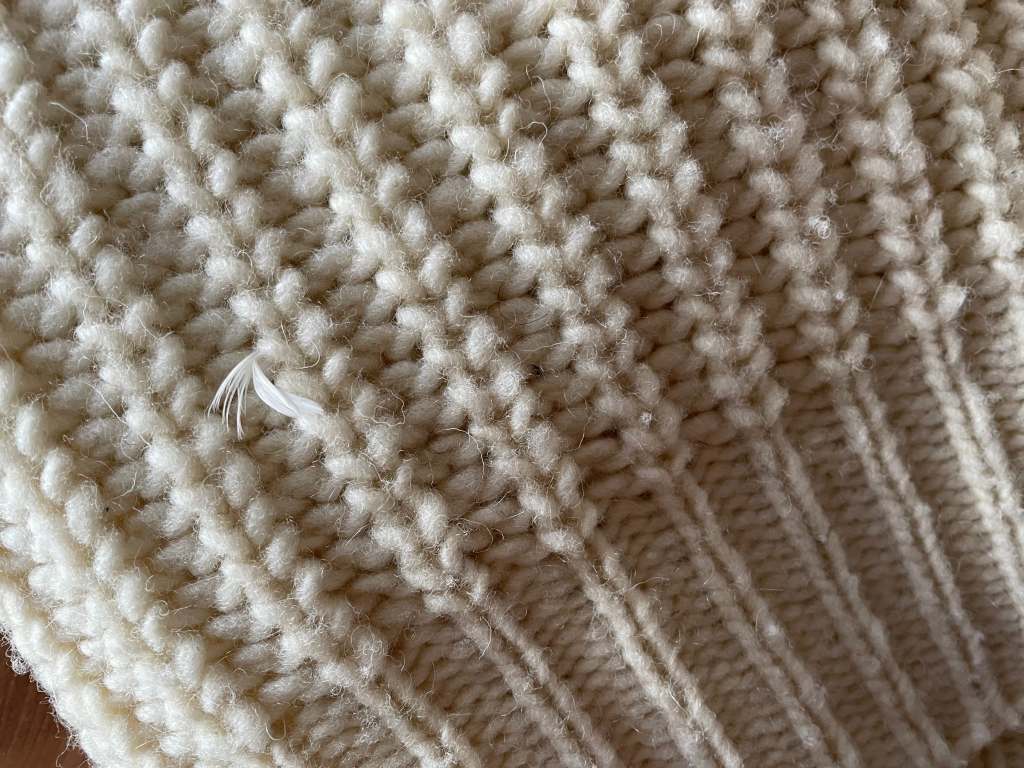
I caught my reflection in this jumper the other day and was horrified to see so much pilling on it. Perhaps it is overdue for a bit of care. It’s even got a little feather stuck in the back! A perfect opportunity for me to share how I clean and care for my wool knits.
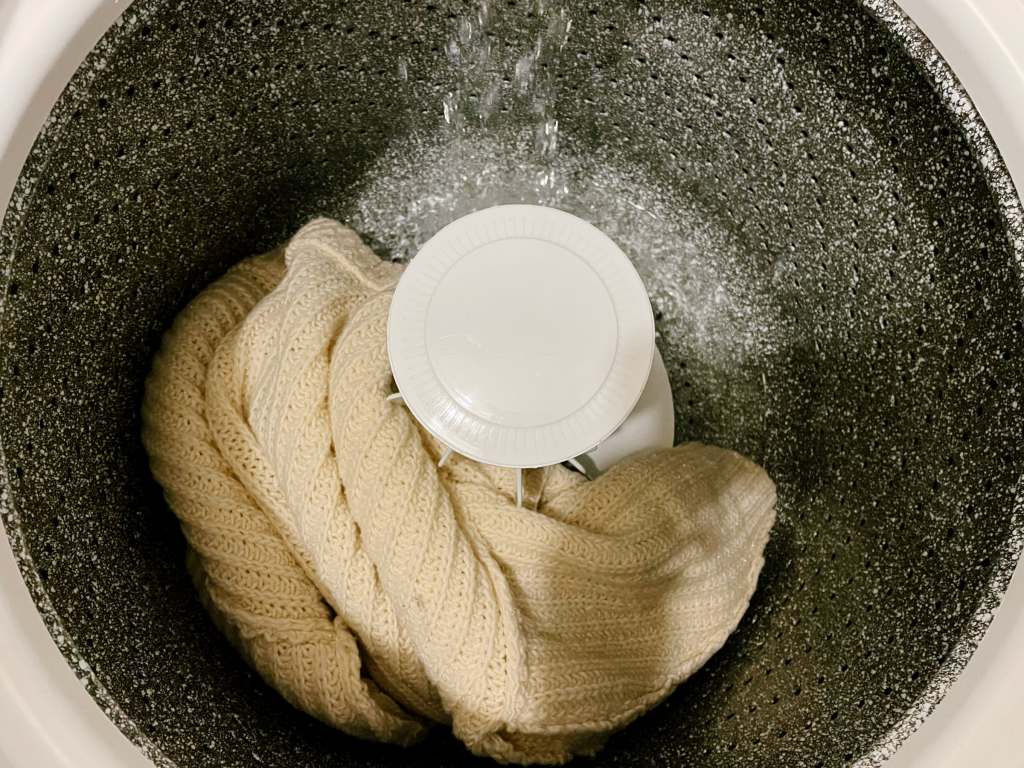
My washing machine has a hand-wash cycle and I use it all the time. The delicate cycle is fine too, if you don’t have a hand-wash cycle. With more fragile or older vintage pieces, I take a very delicate approach – a topic for another day – but for wool sweaters and cozy knit pants of which I am a fan, I just turn them inside out and in they go. Before they go into the machine, I do a quick inspection to make sure there aren’t any pulls or plucks. When in doubt, put the garment into a mesh bag or a pillowcase for washing. This sweater that I’m cleaning today will be fine without, but best to err on the side of caution if you’re unsure. I do one piece at a time to avoid having little blue or brown balls of lint on my cream sweater, for example. I use cold water and a tiny bit of wool wash. Baby shampoo is great in a pinch, too.
Once the cycle is complete, try not to leave it sitting in the machine longer than necessary. Carefully scoop the sweater out of the machine so as not to stretch the wet fibres. I use a laundry drying rack that has an old towel placed over it to dry the sweater. Lay it out flat and shape it so that it doesn’t dry with weird bulges. When there isn’t room for the sleeves to lay flat, I will lay them across the body of the sweater. Leave it overnight or all day, then turn it over and repeat to ensure both sides get lots of air. Enjoy the farm fresh scent of wet wool, as it permeates the room.

Now that it’s dry, it’s time to tackle the pilling. Just like you did before putting it in the wash, inspect the garment before shaving it, to make sure there are no pulls or plucks that could catch in the whirring blades of the shaver. It helps to see where the areas that need the most attention are, so that if you’ve only got a short time to de-pill you can focus there first. I’m a huge fan of the electric clothes shaver. It’s just so efficient and fairly inexpensive. However, sometimes I just want to slow down and keep it quiet. I find that curved nail scissors, or other fine point scissors are excellent for trimming off all the nubbly bits, especially off the cuffs and edges. Just be sure that the curve is pointed up and you’ll be much less likely to snip your garment. The clothes shaver is certainly quicker, but there is something rather meditative about gently and quietly tending to your beloved sweater, isn’t there? When time is not of the essence, it really is nice to take the time to do things the slow way. Make a cup of tea, put on some music or a podcast and get lost in your thoughts while you nip away at little wooly bits.

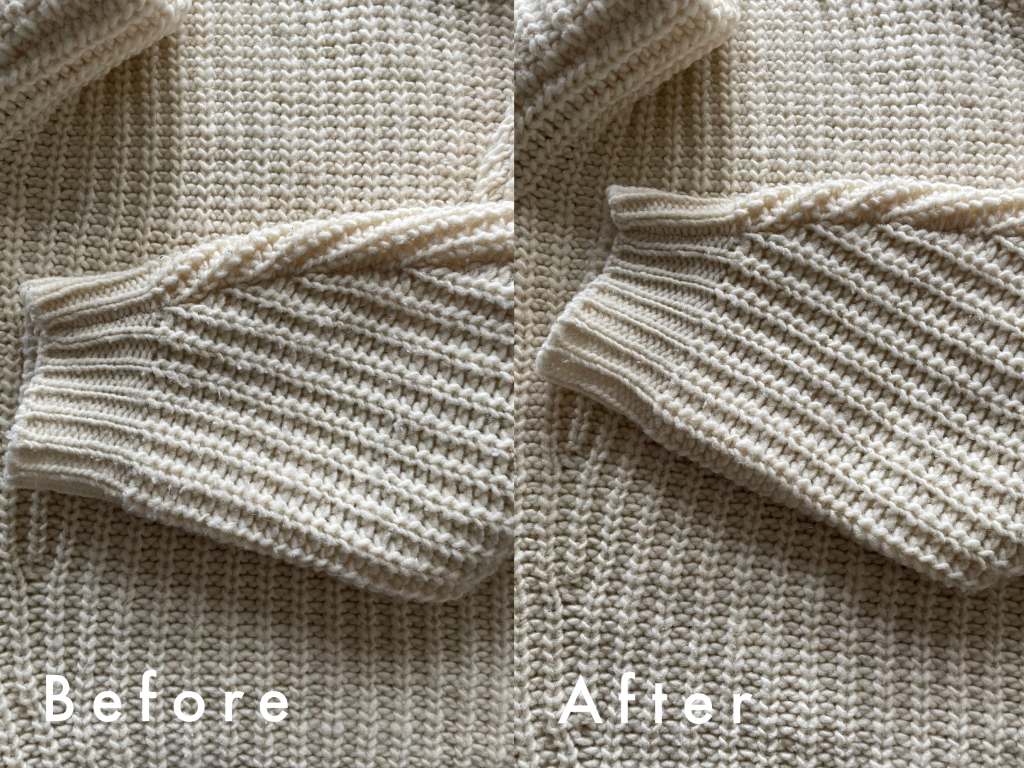
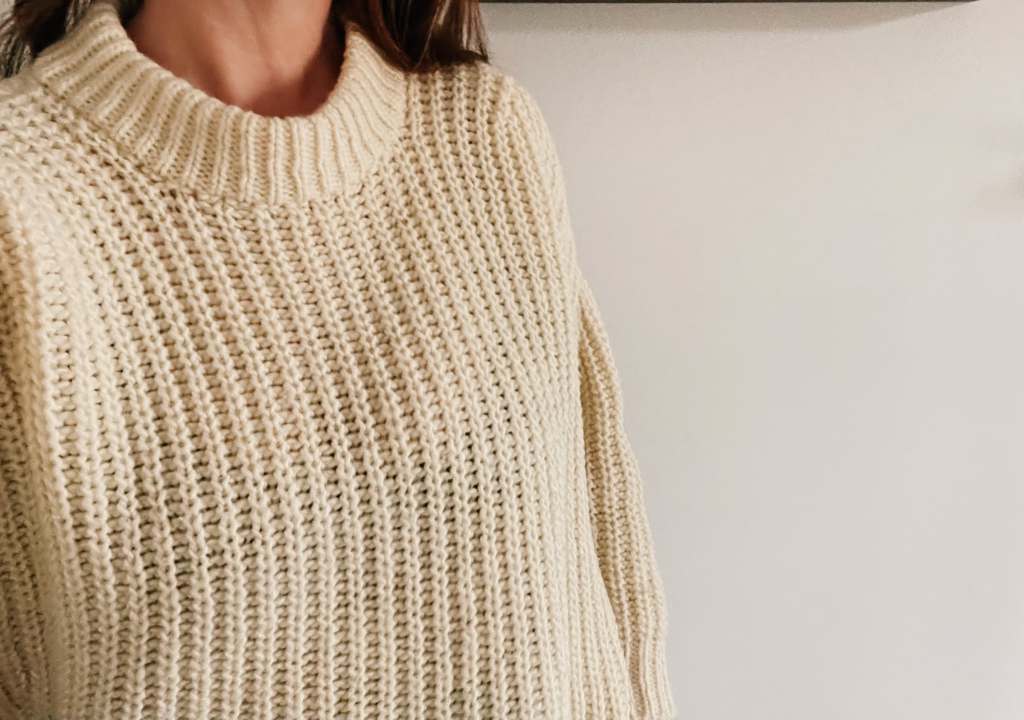
When you’re done, stand back and admire your work. It’s like having a new sweater again! Knitted garments should be stored folded so as not to stretch the fibres. Cedar and lavender are your friends in the battle against moths and stale storage odours. Later in the season, I’ll be making some little drawer sachets to tuck inside my sweaters when I do finally put them away for the summer.
All the little bits and piles of wool fuzz you’ve collected can go into the compost, outside for the birds to nest with, or whatever is appropriate for you.
It does sound a lot of work, but it’s a bit like making bread. It’s a few short activities spread out over a couple of days. Thankfully, wool doesn’t need to be cleaned very often, so this isn’t something you’ll need to do terribly often. There really is a lovely feeling that comes from taking the time to maintain something that you care about. Load after load of laundry can feel like drudgery, but to me, making an effort to take care of a beloved garment is an act of self-care.
Are you a die-hard hand-washer of wool knits? Perhaps you avoid wool due to the fear of shrinking it? If you have any wool care tips to add, I’d love to read them in the comments!


 The Fool and The Moon